Tunneling through Tampa's soft soils is a direct negotiation with limestone karst and a shallow water table. The IBC and ASCE 7 set the baseline, but the real challenge is managing squeezing ground and potential void collapse beneath the city. Before a tunnel boring machine ever touches the soil in Hillsborough County, the subsurface variability must be quantified with precision. A standard site investigation is insufficient here; the analysis must account for erratic pinnacle rock, buried sinkholes, and the persistent presence of the Floridan aquifer just below the surface. The engineering team designs these investigations to confront the specific geohazards that make tunneling in West Central Florida fundamentally different from tunneling in competent rock or stiff clay.
Predicting the behavior of the Floridan aquifer interface is the linchpin of soft ground tunnel design in Tampa.
Methodology applied in Tampa Florida
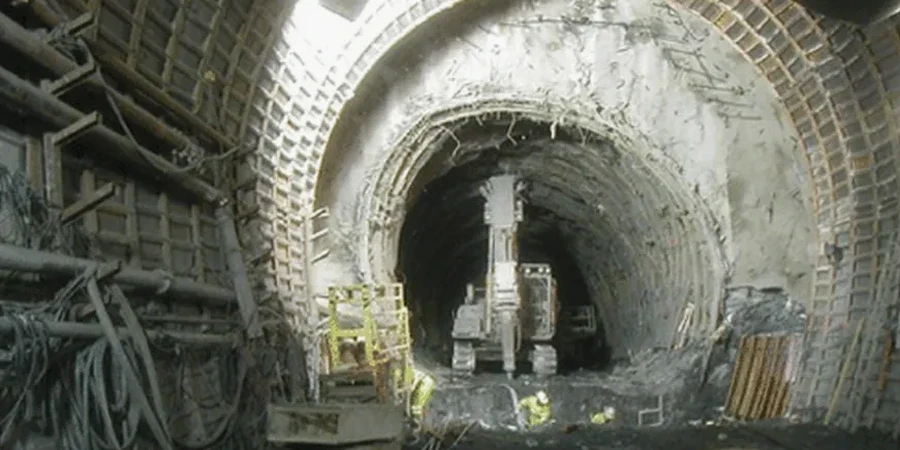
Local geotechnical conditions in Tampa Florida
The subtropical climate of Tampa, with its intense summer rains and hurricane exposure, complicates soft ground tunneling. A sudden storm surge or a heavy rainfall event can rapidly recharge the Floridan aquifer, increasing the hydraulic head against the tunnel face in a matter of hours. This transient loading condition is often overlooked in designs that rely only on dry-season data. The most severe risk is not just face instability; it is the potential for rapid ground loss when a tunnel intersects a sediment-filled karst conduit under pressure. The analysis program explicitly models these transient pore pressure spikes to ensure the face support pressure and the segmental lining are solid enough for the worst-case wet season scenario, not just the average condition.
Our services
The geotechnical analysis for Tampa tunnels is built on a phased approach, moving from geophysical screening to targeted invasive sampling.
Karst Feature and Void Detection
We integrate electrical resistivity and MASW surveys to locate buried sinkholes and solution pipes in the limestone before alignment is finalized.
Advanced Laboratory Testing for Squeezing Ground
We perform triaxial tests and step-loaded consolidation tests on Tampa's organic silts to define the time-dependent deformation behavior critical for tunnel lining design.
Common questions
How much does a geotechnical analysis for a soft ground tunnel in Tampa cost?
The cost for a comprehensive geotechnical analysis for a soft ground tunnel in Tampa ranges from US$4,820 to US$16,180. The final figure depends heavily on the depth of the tunnel, the extent of karst investigation needed, and the number of borings required to cover the alignment.
How does the karst geology affect a tunnel boring machine in Tampa?
Karst geology introduces erratic rockhead and potential voids. A TBM can encounter a sudden drop in resistance when it hits a clay-filled sinkhole, or it can face damage from cutting into a pinnacle of hard limestone surrounded by soft soil. The analysis maps these transitions to prevent differential settlement and cutterhead damage.
What laboratory tests are critical for tunneling through the soft soils near the Hillsborough River?
Consolidation and triaxial shear tests are critical. The organic silts near the river are normally consolidated and highly compressible. We run constant-rate-of-strain consolidation tests to simulate the stress relief during excavation and undrained triaxial tests to determine the low shear strength that governs face stability. More info.