Tampa, sitting at roughly 48 feet above sea level on Florida’s Gulf Coast, deals with a subsurface that keeps even experienced geotechnical engineers on their toes. The mix of loose quartz sands, soft organic silts, and the ever-present limestone karst creates a profile where conventional sampling often falls short. That’s why the Cone Penetration Test (CPT) has become such a critical tool around the bay. In our experience, pushing an instrumented cone at a steady 2 cm per second delivers a continuous readout of tip resistance and sleeve friction—data that’s simply impossible to get from split-spoon samples alone. For projects near the Hillsborough River or out toward MacDill AFB, where the water table sits just a few feet down, we often pair CPT soundings with a seismic refraction survey to map the top of rock reliably. It’s a practical combination that helps define the transition from overburden to weathered limestone without speculation.
A CPT sounding in Tampa karst tells you more in two hours than a week of standard penetration testing ever could.
Methodology applied in Tampa Florida
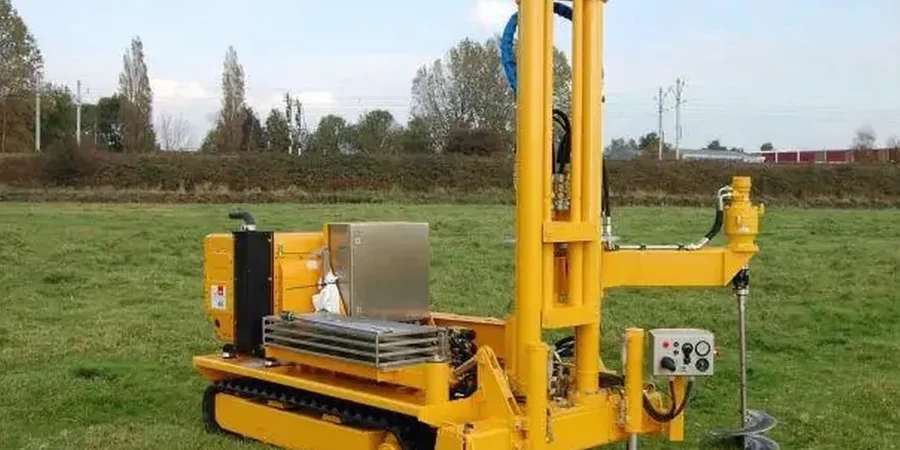
Local geotechnical conditions in Tampa Florida
The mistake we see most often in Tampa isn’t running a CPT—it’s stopping the sounding too early. Contractors unfamiliar with Florida karst will hit apparent refusal on a thin caprock or a cemented sand layer at, say, 20 feet, and assume they’re on competent limestone. They’re not. In many cases, there’s a soft clay seam or a dissolution void directly underneath that thin hard layer, and missing it leads to differential settlement nightmares. We’ve seen this play out on mid-rise condo projects in the Westshore district where foundation loads punched right through what was assumed to be a bearing stratum. A properly executed CPT with pore pressure measurement (CPTu) catches these anomalies because the dissipation test reveals drainage characteristics that a simple blow count never will. The IBC and Florida Building Code require thorough site characterization for a reason—Tampa’s geology doesn’t forgive shortcuts.
Our services
Our CPT testing services across the Tampa Bay area are structured to address the specific geotechnical challenges posed by Florida’s coastal geology and karst terrain.
Piezocone (CPTu) Sounding
Full-depth CPT with pore pressure measurement for stratigraphic profiling, liquefaction evaluation, and detection of karst-related voids and soft seams beneath shallow rock layers.
Dissipation Testing and Consolidation Analysis
On-site pore pressure dissipation tests at designated depths to estimate horizontal coefficient of consolidation (ch) in compressible clay layers, critical for settlement time-rate predictions.
Seismic CPT (SCPTu) Integration
Downhole shear wave velocity measurement during CPT advancement, providing direct Vs data for site classification per IBC Chapter 20 without a separate borehole array.
Common questions
What does a CPT test cost for a typical Tampa residential lot?
For a standard CPT sounding to 30–40 feet depth on a residential lot in the Tampa area, the cost typically ranges from US$180 to US$260 per sounding, with mobilization and reporting included. Deeper soundings, SCPTu with shear wave velocity, or sites requiring specialized access equipment will increase the total based on the scope.
How does CPT help assess sinkhole risk in Tampa?
The CPT’s continuous tip resistance and sleeve friction profiles are exceptionally sensitive to the sudden drops in bearing capacity that signal a raveling zone or incipient sinkhole. When the cone encounters a void or very loose soil column above a karst feature, the data shows an immediate, unambiguous signature that standard SPT sampling can easily miss between hammer blows.
How deep can you push a CPT cone in Tampa’s soil conditions?
In the surficial sands and silts that dominate much of Tampa, we routinely reach 60 to 90 feet. Depth capacity reduces significantly when the cone encounters the cemented layers of the Tamiami Formation or the hard limestone of the Ocala platform, where refusal typically occurs. We monitor thrust capacity and rod friction continuously to avoid damaging equipment or producing unreliable data.