Tampa's growth from a 19th-century military outpost to a sprawling Gulf Coast metropolis has pushed construction onto some challenging ground. The city sits on a mix of sandy surficial deposits and the underlying Hawthorne Group clays, with limestone often present at depth. For engineers working in Tampa, the Standard Penetration Test provides the first hard look at soil behavior. The procedure follows ASTM D1586 strictly, recording the N-value as the sampler is driven through each 6-inch increment. Data interpretation considers the local geology, where clean sands can produce elevated blow counts due to dilation near the spoon. We combine field SPT data with lab index tests to refine bearing capacity estimates for Tampa's variable subsurface profile.
In Tampa's high water table conditions, SPT N-values must be corrected for overburden and energy efficiency before any bearing capacity calculation.
Methodology applied in Tampa Florida
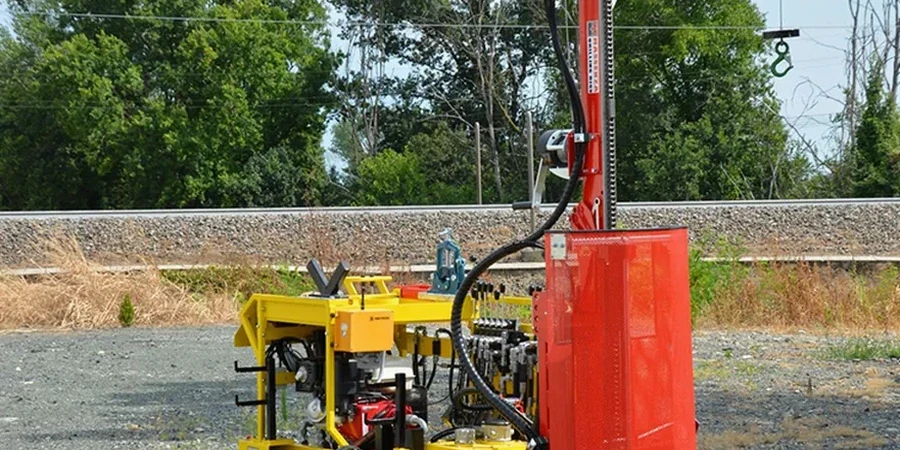
Local geotechnical conditions in Tampa Florida
A 7-story mixed-use project on Kennedy Boulevard hit a snag when the initial SPT logs showed N-values under 4 in the top 15 feet. The team had planned a conventional spread footing foundation, but the data pointed to excessive settlement. The soil profile revealed loose fine sand with silt, typical of Tampa's relict dune deposits. Without the SPT data, the structural engineer would have designed for a bearing pressure the soil simply could not sustain. The fix involved switching to a mat foundation with a thicker slab and wider footprint to distribute the load. The Florida Building Code requires this level of investigation, and the SPT is the backbone of the subsurface exploration. Skipping it risks differential settlement that can crack partitions and bind doors within the first year of occupancy. In Tampa's coastal plain, what you don't probe can cost you the whole foundation.
Our services
Our Tampa SPT program delivers more than just N-values. Each boring log ties directly to geotechnical design parameters.
Standard SPT Borings
Subsurface exploration with hollow-stem auger or mud rotary drilling. Soil sampling at 5-foot intervals and at stratigraphic changes. Includes groundwater observation and field classification per ASTM D2488.
SPT with Undisturbed Sampling
Combined SPT borings with thin-wall Shelby tube samples in cohesive layers. Paired with lab triaxial testing for strength parameters used in deep foundation design.
Liquefaction Assessment Package
SPT-based liquefaction triggering analysis using the Seed & Idriss simplified procedure. Applies fines content correction and magnitude scaling factor per NCEER workshop recommendations. Delivers a depth profile of factor of safety against liquefaction.
Common questions
What does an SPT test in Tampa typically cost?
For a single boring to 30 feet, the cost usually falls between US$540 and US$770. This includes the drilling crew, the SPT sampling at regular intervals, a field log, and a brief summary memo. The final figure depends on access, traffic control requirements, and the number of borings in the program.
How deep do you typically drill for SPT in Tampa?
Most commercial projects require borings to 30 or 40 feet. For taller structures or sites near the bay, depth often extends to 60 feet or until auger refusal on competent limestone. The Florida Building Code provides minimum boring depth based on building footprint and load intensity.
How do you handle SPT refusal on limestone in Tampa?
When 50 blows advance the sampler less than 6 inches, we log refusal and switch to coring the rock if needed. The transition zone between the sand and the weathered limestone is critical, and we often use a CPT test to capture a continuous profile across that interface where SPT data becomes sparse.