A 35-foot excavation in downtown Tampa for a mixed-use tower hit a surprise at 18 feet: saturated, loose silty sand that started sloughing within hours of exposure. The contractor had to pause work and call for an immediate design revision. This scenario plays out often across the Tampa Bay area, where the shallow groundwater table and alternating layers of sand, clay, and limestone create unpredictable conditions for deep cuts. For projects in Channelside, Westshore, or along the Hillsborough River, a geotechnical design of deep excavations must address soil behavior, lateral earth pressures, and dewatering requirements from the start. The engineering team develops shoring plans, calculates strut loads, and designs tieback anchor systems that keep the excavation stable through every phase of construction. On sites near the bay, where saline groundwater accelerates corrosion, material selection for soldier piles and walers becomes a critical design parameter that cannot be overlooked.
The shallow water table in Tampa turns a standard excavation into a hydraulic engineering problem; designing the dewatering system is as critical as designing the wall itself.
Methodology applied in Tampa Florida
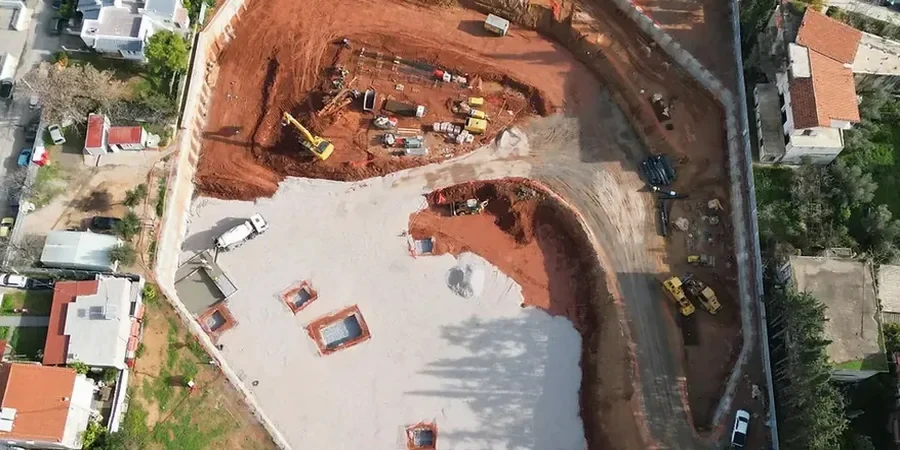
Local geotechnical conditions in Tampa Florida
ASCE 7-22 Section 3.2 mandates that excavations adjacent to existing structures incorporate a detailed evaluation of surcharge loading and vibration-induced settlement. In Tampa's urban core, where new high-rises often rise within feet of historic masonry buildings on Franklin Street or modern condos along Bayshore Boulevard, the margin for error is measured in fractions of an inch. A design that underestimates the lateral deflection of a soldier pile wall can transfer movement through the soil mass, causing cracking in adjacent foundations or pavement. The Hawthorn Group clays present an additional challenge: their fissured structure and variable cementation can lead to strength loss upon stress relief during excavation. The engineering team addresses this by specifying pre-excavation grouting or jet grout bottom seals when the basal stability factor of safety drops below the required threshold. Groundwater control failures are the most common cause of excavation collapse in Florida; a single failed wellpoint or undersized sump can flood a 40-foot cut in under an hour, undermining the passive resistance zone and triggering a progressive wall failure.
Our services
The scope of a deep excavation design engagement in Tampa covers the full engineering workflow, from initial analysis through construction-phase support. Each component is tailored to the specific stratigraphy and loading conditions of the project site.
Shoring System Design & Analysis
Complete structural design of soldier pile and lagging walls, secant pile walls, or diaphragm walls using limit equilibrium and numerical methods. Includes staged excavation models, waler and strut design, and embedment depth calculations that satisfy both strength and serviceability limit states.
Dewatering & Groundwater Control Plans
Design of deep well, wellpoint, and eductor systems sized for the transmissivity of the Tampa Limestone and surficial sand aquifers. Hydraulic modeling predicts drawdown extent and evaluates settlement risk at adjacent properties, with contingency plans for artesian conditions.
Construction Monitoring & Instrumentation
Specification and interpretation of inclinometer arrays, piezometers, and survey monitoring points to track wall deflection and groundwater response during excavation. Data is reviewed against design predictions, with trigger values established for contingency actions if movements exceed allowable thresholds.
Common questions
How long does it take to complete a deep excavation design for a Tampa project?
A typical design package for a site in Tampa takes three to five weeks from receipt of a complete geotechnical report. The timeline depends on excavation depth, proximity to adjacent structures, and the complexity of the groundwater control system. Expedited schedules are possible when the drilling contractor is mobilized and awaiting stamped drawings.
What is the cost range for a geotechnical design of deep excavations in Tampa?
Design fees for deep excavation projects in the Tampa area generally range from US$2,270 for a straightforward single-wall shoring design to US$8,840 for a complex multi-level braced excavation with dewatering modeling and instrumentation specifications. The final fee depends on the linear footage of wall, number of strut levels, and whether peer review by a third-party engineer is required.
How do you account for Tampa's high water table in the excavation design?
The design incorporates a site-specific groundwater model calibrated to long-term monitoring data from USGS wells in Hillsborough County. We specify cutoff walls or deep wells to lower the phreatic surface below the excavation base, and we check for piping and heave using the actual hydraulic gradients. The dewatering plan includes a redundancy requirement: if one pump fails, the backup system must maintain drawdown without interruption. More info.