Tampa's stormwater regulations under the City Code Chapter 21 mandate precise infiltration rates for any project exceeding 5,000 square feet of impervious surface. The Lefranc and Lugeon field permeability tests provide that data directly from the subsurface, not from a remolded lab sample. Our lab team runs these tests under ASTM D6391 procedures, lowering the probe into the Hawthorne Group clays or the surficial sands to record steady-state flow. The IBC Section 1803.5.5 requires in-situ hydraulic conductivity data when designing deep drainage systems or retention ponds in Florida's high water table conditions. Getting reliable numbers early saves costly redesign when the Southwest Florida Water Management District reviews your permit. We also see many engineers pairing this data with a CPT test to correlate permeability with tip resistance in the sandy lenses common across Hillsborough County.
A Lefranc test in Tampa's fine sand can show a k-value ten times higher than a lab permeameter test on the same soil.
Methodology applied in Tampa Florida
Local geotechnical conditions in Tampa Florida
The rapid expansion of Westshore and the Channel District over the past twenty years placed heavy infrastructure on soils with unpredictable drainage. Old Tampa Bay left behind layers of organic silt and loose sand that can hold water for days after a summer storm. A standard lab permeability test on a disturbed sample often misses the natural fissures and root holes that double the field permeability. We have seen retention ponds fail acceptance tests because the design used lab values that were too conservative. The real danger is not that the soil is too tight. It is that the soil drains much faster than assumed, and the underdrain system is undersized. A field test with the Lugeon probe in the underlying limestone reveals solution cavities that would never show up in a split-spoon sample. These features can drain a pond in hours and compromise the treatment volume required by the ERP permit.
Our services
Our Tampa field crew handles the entire permeability testing sequence from the drill rig setup to the final signed report. Each test package is tailored to the geological unit encountered.
Lugeon Packer Test
We isolate a 3-foot section of borehole with a pneumatic packer and inject water at five pressure increments. This maps the fracture conductivity in the Tampa Limestone member.
Lefranc Falling-Head Test
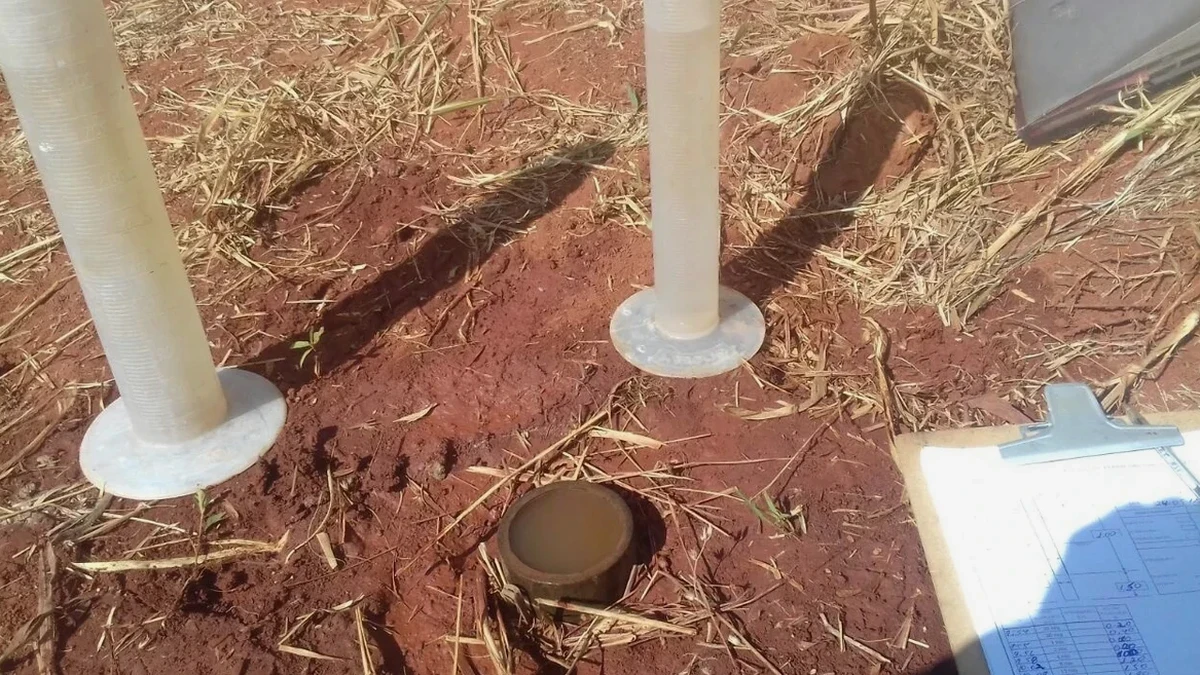
A PVC casing is installed in sandy soil and filled with water. We record the drawdown rate with a water level meter to calculate the hydraulic conductivity in fine-grained overburden.
Infiltration Basin Testing
Double-ring infiltrometer tests at the proposed basin floor elevation provide the design infiltration rate per SWFWMD guidelines. We run these tests with a minimum 24-hour saturation period.
Common questions
When does the City of Tampa require a field permeability test instead of a lab test?
The City requires field testing for stormwater retention systems, exfiltration trenches, and deep injection wells. Lab permeability tests are often not accepted for final design because they cannot reproduce the in-situ structure of Tampa's sandy soils and weathered limestone. The engineering review team at the Development Services Center will flag any drainage report that lacks field k-values for a Type A or B wet detention system.
What is the typical cost range for a Lefranc or Lugeon test in Tampa?
A single Lefranc test typically runs between US$550 and US$800 depending on depth and casing diameter. A full five-stage Lugeon test in rock generally falls between US$780 and US$1,030 per borehole. Mobilization within Hillsborough County adds a flat fee. We provide a fixed-price quote after reviewing the geotechnical boring plan.
How long does it take to get the hydraulic conductivity results?
The field procedure for a Lefranc test takes about 45 to 90 minutes once the borehole is stable. A Lugeon test in the Tampa Limestone takes about two hours for all five pressure stages. We send the field data sheet the same day. The final signed report with the calculated k-values and the test plots is delivered within three business days.
Can you test permeability through the surficial sand and into the limestone in the same borehole?
Yes. We drill through the sand and set the casing into the top of the limestone. We run a Lefranc test in the sand layer first. Then we advance the borehole into the rock, set the packer, and run the Lugeon test. This gives the engineer two separate k-values from one boring location. It is a common request for deep foundation designs in the Westshore business district.