The 2020 Florida Building Code, incorporating ASCE 7-16, mandates rigorous slope stability analysis for any construction near embankments, retention ponds, or natural grades exceeding a 3:1 ratio. In Tampa, this isn't just a bureaucratic step. The underlying Hawthorne Group limestones and the surficial sands of the Pamlico terrace create a two-layer system that behaves unpredictably when saturated.
We've seen well-compacted fills on Davis Islands lose shear strength after a single tropical storm event simply because the drainage path was underestimated. Before you break ground on a subdivision in New Tampa or a commercial pad near the Hillsborough River, the factor of safety under both static and seismic conditions must be verified. This involves more than a generic software model; it requires direct shear data from the specific colluvium on your site, correlated with triaxial testing to define the Mohr-Coulomb failure envelope accurately for Florida's silty fine sands.
A factor of safety of 1.5 is meaningless in Tampa if you haven't modeled the rapid drawdown condition after a summer afternoon thunderstorm—that's when the pore pressure lag kills the slope.
Methodology applied in Tampa Florida
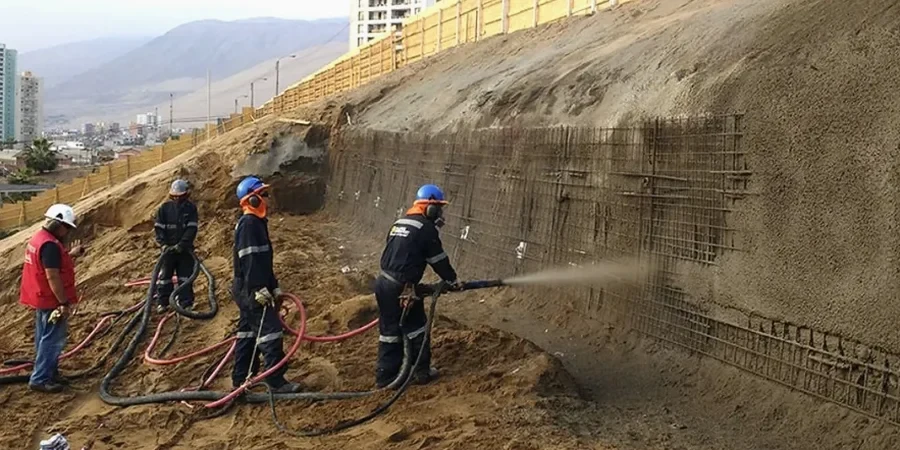
Local geotechnical conditions in Tampa Florida
A 40-foot cut for an underground parking garage near downtown Tampa's riverfront started showing tension cracks just 18 hours after a heavy dew—not even a storm. The contractor had assumed a drained friction angle of 32 degrees based on a standard SPT blow count correlation, but the sandy clay of the Pamlico terrace was actually operating at a residual strength of 24 degrees due to slickensided fissures from ancient desiccation. We stopped the excavation and implemented a retaining walls system with tie-back anchors to redistribute the lateral thrust before the bench collapsed. In Tampa, the risk multiplier is always water. The Floridan aquifer's potentiometric surface can rise several feet in August, turning a stable 2:1 slope into a flow slide. Ignoring the transient seepage forces in a limit equilibrium model is the single most common cause of slope failures we remediate in Hillsborough County.
Our services
A complete slope stability package for a Tampa site requires a smooth transition from subsurface characterization to computational modeling. We structure our workflow to eliminate the disconnect between the drilling crew and the geotechnical analyst:
Limit Equilibrium & Finite Element Modeling
We build fully integrated models using the actual stratigraphy from your Tampa boring logs, not idealized layers. Our analysis covers global stability, surficial sloughing, and internal erosion potential (piping) for the sandy soils common in the Carrollwood and Westchase areas. Deliverables include a sealed report with critical failure surface geometry, reinforcement requirements, and drainage specifications.
Stabilization & Remediation Design
When the calculated factor of safety falls below the IBC threshold, we don't just hand you a warning. We design the fix. This includes soil nailing layouts for steep cuts in the Hawthorn clay, horizontal drains to depress the water table near retention ponds, and geogrid-reinforced slopes for embankment widening projects along the Lee Roy Selmon Expressway.
Common questions
What is the typical cost range for a slope stability analysis on a residential lot in Tampa?
For a typical residential lot requiring a site-specific cut or fill slope evaluation in Hillsborough County, the engineering fee ranges from US$1,130 to US$4,630. The spread depends on whether we need to mobilize a CPT rig for pore pressure data or if we can work with existing soil boring logs, and on the complexity of the required cross-sections.
How does the Florida Building Code handle the seismic component of slope stability?
Under the IBC 2020, Tampa falls into a low-to-moderate seismic design category. However, Section 11.8 of ASCE 7-16 still requires a pseudo-static analysis for slopes greater than 15 feet in height. We apply a horizontal seismic coefficient (kh) calibrated to the site class—typically 0.10 for stiff soil profiles in Tampa—and reduce the factor of safety to a minimum of 1.1 for the seismic condition.
Can you analyze the stability of an existing stormwater retention pond embankment?
Yes, this is a frequent request in Tampa subdivisions. We evaluate the upstream and downstream slopes under rapid drawdown, which is the controlling condition for these ponds. Using a saturated-unsaturated seepage model calibrated to the local sandy soils, we verify the embankment against rotational failure and internal erosion, referencing the Hillsborough County stormwater technical manual for the design storm event.