Tampa sits barely 48 feet above sea level, and about 20% of Hillsborough County rests on karst limestone susceptible to sinkholes. That's not a footnote. It's the starting point for every mat foundation we design here. When spread footings don't cut it—loose sands, variable fill, or proximity to the bay—a stiffened raft spreads the load across a bigger footprint. We don't just run the numbers. We've worked sites from Ybor City to Westchase where the stratigraphy changes in less than 100 horizontal feet. A solid mat foundation design here means reading the geology, not just the bearing capacity equation. And with hurricane-driven storm surge pushing water tables up seasonally, buoyancy checks aren't optional.
A mat foundation in Tampa isn't just a thick slab. It's a structural raft designed to ride out loose sands, high water, and the ever-present karst below.
Methodology applied in Tampa Florida
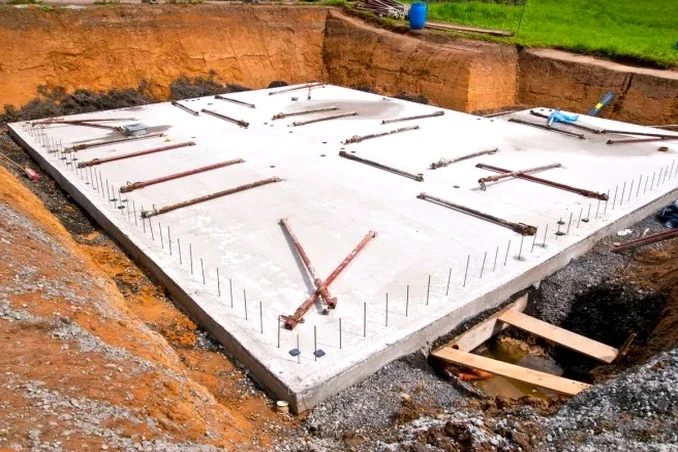
Local geotechnical conditions in Tampa Florida
Around Tampa, the biggest headache isn't just settlement. It's differential movement across a footprint that's supposed to act as one unit. We've pulled soil logs on two borings 60 feet apart where one side hits limestone at 20 feet and the other goes to 45 feet in sand. That's a recipe for a cracked mat if you don't stiffen the transition zone. Then there's water. A seasonal high water table at 3 feet below grade changes the buoyancy game entirely. We always run an uplift check with the design flood elevation from the FEMA FIRM panel for the specific parcel. And don't overlook sulfate attack. Some of the deeper clay lenses in South Tampa carry enough sulfates to warrant Type V cement or a protective coating on the concrete.
Our services
We provide a full package: geotechnical investigation, engineering analysis, and construction-ready drawings. Each project gets a tailored scope based on the site conditions.
Mat foundation sizing and reinforcement design
We calculate mat dimensions, thickness, and rebar schedules using rigid or flexible methods depending on soil variability. Output includes CAD-ready plans and edge beam detailing.
Settlement and bearing capacity analysis
Using consolidation data from lab tests and SPT correlations, we project total and differential settlement under dead plus live loads. Results checked against IBC serviceability limits.
Karst and sinkhole risk evaluation
For sites in sinkhole-prone zones, we correlate SPT refusal depths, GPR profiles, and county sinkhole maps to recommend subgrade stabilization or thickened raft sections.
Common questions
What is the typical cost range for a mat foundation design in Tampa?
For a residential or light commercial structure, engineering design fees generally fall between US$920 and US$4,130. The spread depends on project size, number of borings required, and whether we're dealing with standard soil or a sinkhole-active zone. Complex geometry or deep edge beams push it toward the upper end.
When does a mat foundation make more sense than footings in Florida?
Three triggers: soils with bearing capacity below 2,000 psf, high water table where excavation for deep footings becomes a dewatering mess, and sites where sinkhole risk calls for a rigid platform that can span small voids. If the estimated settlement under isolated footings exceeds 1 inch total or 0.5 inches differential, a mat usually comes out ahead.
How do you account for sinkholes in the foundation design?
We start with the county sinkhole database and any available GPR or ER surveys. Then we check the thickness of competent sediment over the limestone. If it's marginal, we design the mat to act as a bridging structure over a hypothetical void—typically a 5-foot diameter opening—using the tensile capacity of the reinforced slab. Sometimes subgrade grouting is done before the mat is poured.