Tampa's transformation from a 19th-century phosphate shipping port into a sprawling Gulf Coast metro brought development right up against the bay. The city sits on layers of Pleistocene and Holocene sands, often with a water table less than five feet down. Any engineer who has worked along the Hillsborough River or near the port knows what that combination means: a real susceptibility to seismic-induced soil liquefaction. The Florida Building Code, which incorporates ASCE 7-22, requires a site-specific analysis for structures in Seismic Design Category C or higher. This is not a check-box exercise. A proper soil liquefaction analysis here means reading the stratigraphy carefully, knowing which sandy layers will lose effective stress under cyclic loading, and calculating the resulting settlement. For projects in the Westshore district or downtown, we often pair the cone penetration test with lab-based cyclic triaxial tests to derive the cyclic resistance ratio (CRR) without the disturbance that comes from traditional sampling.
Cyclic softening in Tampa's coastal sands can produce settlements exceeding three inches during a moderate earthquake — enough to render a building structurally unserviceable.
Methodology applied in Tampa Florida
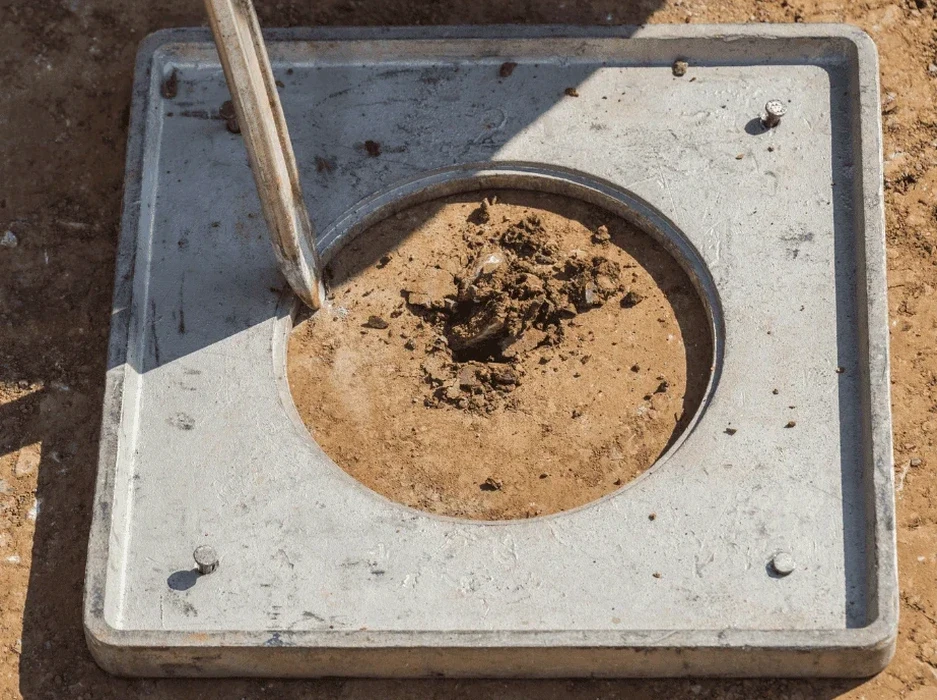
Local geotechnical conditions in Tampa Florida
A common mistake local contractors make is skipping the cyclic laboratory testing and relying solely on SPT-based empirical charts developed for California or Japanese earthquakes. Tampa's sands have a unique fines content and aging effect — they can look clean but behave like silty sand under cyclic loading. IBC and ASCE 7 mandate that when the simplified procedure yields a factor of safety below 1.5, you must perform site response analysis and, in many cases, cyclic direct simple shear or cyclic triaxial testing. Ignoring this step leads to two problems. First, you overestimate the cyclic resistance, giving a false sense of security. Second, you miss the volumetric strain potential. Even if the ground does not fully liquefy, excess pore pressure buildup can cause significant settlement, damaging buried utilities and slab connections. In the Ybor Channel area, with its artificial fill over estuarine deposits, this mistake has resulted in multimillion-dollar litigation.
Our services
Our liquefaction assessment package is built around the idea that you need both field characterization and laboratory validation to get the story right. We run the field program, interpret the data using site-specific ground motion models, and deliver a report signed by a Florida-licensed engineer.
Site-Specific Liquefaction Hazard Evaluation
Includes seismic CPT soundings, laboratory index testing to confirm fines content, and calculation of the factor of safety against liquefaction using both the simplified procedure and nonlinear effective stress site response analysis. We provide settlement estimates and lateral spreading displacement for free-face and gently sloping ground conditions.
Ground Improvement Verification Testing
Post-treatment CPT testing to verify that vibrocompaction, stone columns, or deep soil mixing have achieved the target reduction in cyclic shear strain potential. We compare pre- and post-improvement cone tip resistance and sleeve friction ratios to confirm the design CRR has been met.
Common questions
What is the typical cost range for a liquefaction analysis in Tampa?
For a standard commercial lot, a complete soil liquefaction analysis in Tampa typically ranges from US$2,870 to US$4,400, depending on the number of CPT soundings and whether laboratory cyclic testing is required.
Does the Florida Building Code require a liquefaction study for residential construction?
The code requires a liquefaction study when a structure is assigned to Seismic Design Category C or higher and the site contains potentially liquefiable soils. For most single-family homes, this is not triggered unless the site is in a mapped high-risk zone and contains loose saturated sand in the upper 50 feet.
How do you determine the cyclic resistance ratio (CRR) for Tampa's sandy soils?
We primarily use CPT-based correlations from the NCEER/NSF workshop proceedings, corrected for fines content and overburden stress. When the factor of safety is marginal, we extract thin-walled Shelby tube samples and run cyclic triaxial tests to measure the CRR directly, applying the Ladd reconsolidation technique to mitigate sample disturbance effects.
What ground improvement methods work best for liquefiable soils in the Tampa Bay area?
Vibrocompaction and stone columns are the most common methods for clean to silty sands. For sites with higher fines content, deep soil mixing or permeation grouting may be more effective. The choice depends on the grain size distribution and the target depth of treatment, which in coastal Tampa often reaches 25 to 35 feet to get into the Hawthorne Formation.
How long does a full liquefaction analysis take from field work to final report?
A typical timeline is three to four weeks. Field work takes one to two days. If cyclic triaxial testing is required, the laboratory phase adds about 10 business days. The engineering report with settlement and lateral spreading calculations is delivered within one week after lab data is available.