ASTM D4318 governs our Atterberg limits testing, and in Tampa it is not just a routine lab exercise — it is a direct line of defense against differential settlement. The shallow water table across the Tampa Bay area, often just 3 to 6 feet below grade in neighborhoods like Seminole Heights or near the Hillsborough River, keeps fine-grained soils perpetually saturated. When clay particles hold that moisture, the plasticity index becomes the single most telling number in your geotechnical report. Builders who skip this step in Tampa often learn the hard way: floor slabs crack, pavements heave, and retaining walls tilt before the first year is out. We run the liquid limit and plastic limit on every disturbed sample pulled from SPT splits or test pit walls, because the Unified Soil Classification System depends on these numbers to flag expansive potential. For deep foundations or stone columns in reclaimed coastal zones, knowing whether your silty clay plots as CL or CH changes the entire ground improvement strategy.
A plasticity index shift of just ten points can mean the difference between a standard slab and an engineered structural foundation in Tampa's saturated clays.
Methodology applied in Tampa Florida
Local geotechnical conditions in Tampa Florida
Tampa's subtropical climate creates a shrink-swell cycle that punishes structures built on high-plasticity clays without proper classification. The city receives over 50 inches of rain annually, concentrated in summer thunderstorm season, followed by a pronounced dry winter. That oscillation drives the moisture content in Tampa's near-surface clay lenses through a wide envelope, from fully saturated in August to desiccated and cracked by February. A soil with a liquid limit of 60 and plastic limit of 25 — not uncommon in the clay pockets found east of I-275 — can experience volume changes exceeding ten percent between seasons. Without Atterberg limits data, the geotechnical engineer cannot assign a reliable expansion index, and the structural designer is left guessing. We have seen Tampa projects where omitting this twenty-minute lab test led to six-figure foundation repairs within three years. The Florida Building Code references ASCE 7 for load combinations, but it is ASTM D2487 — fed by Atterberg results — that tells you whether the soil itself is a load you must design against.
Our services
Atterberg limits results feed directly into several geotechnical design tasks common in Tampa. Our laboratory integrates these index properties with the broader site investigation:
Plasticity-Based Foundation Sizing
We correlate your plasticity index to bearing capacity reduction factors for shallow footings and slab-on-grade, per IBC Chapter 18, so Tampa engineers get actionable design parameters.
Expansive Soil Classification
Using the Casagrande plasticity chart, we classify your Tampa site soils as CL, CH, ML, or MH — the four fine-grained groups that dictate whether you need moisture barriers, lime treatment, or overexcavation.
Pavement Subgrade Evaluation
For Tampa parking lots and access roads, we pair Atterberg results with CBR testing to predict how the subgrade will behave under repeated wetting and drying cycles.
Retaining Wall Backfill Assessment
Plasticity index directly influences lateral earth pressure calculations; we test proposed backfill material to confirm it meets Florida DOT low-plasticity requirements for free-draining behavior.
Common questions
What is the typical cost for Atterberg limits testing in Tampa?
For a single-point Atterberg limits test (liquid limit plus plastic limit) on one disturbed sample, the cost ranges from US$70 to US$100. Most Tampa projects require three to five points across the site to establish a representative profile, which brings the total lab fee to approximately US$210 to US$500 depending on sample count and turnaround speed.
How long does the Atterberg limits lab test take?
The hands-on procedure takes about 20 to 30 minutes per sample once the soil is prepared. In our Tampa lab, we typically report results within 24 to 48 hours of receiving the disturbed sample, because we know foundation contractors are often waiting on these numbers to confirm slab design.
Why is the plasticity index important for Tampa specifically?
Tampa's high water table and seasonal rainfall extremes mean fine-grained soils here cycle between saturated and dry states more aggressively than in drier regions. The plasticity index quantifies how much water a soil can hold before it changes from a plastic solid to a viscous liquid — and that number directly predicts seasonal volume change potential under Tampa foundations.
Can you run Atterberg limits on sand samples?
Atterberg limits only apply to the fine fraction passing the No. 40 sieve — silt and clay. Pure sands are non-plastic and report a plasticity index of zero. In Tampa, many of our samples are silty sands (SM) or clayey sands (SC), so we wash the sample first, then test the fines to determine whether the small percentage of clay is highly plastic or inert.
Which ASTM standard applies to Atterberg limits in Florida?
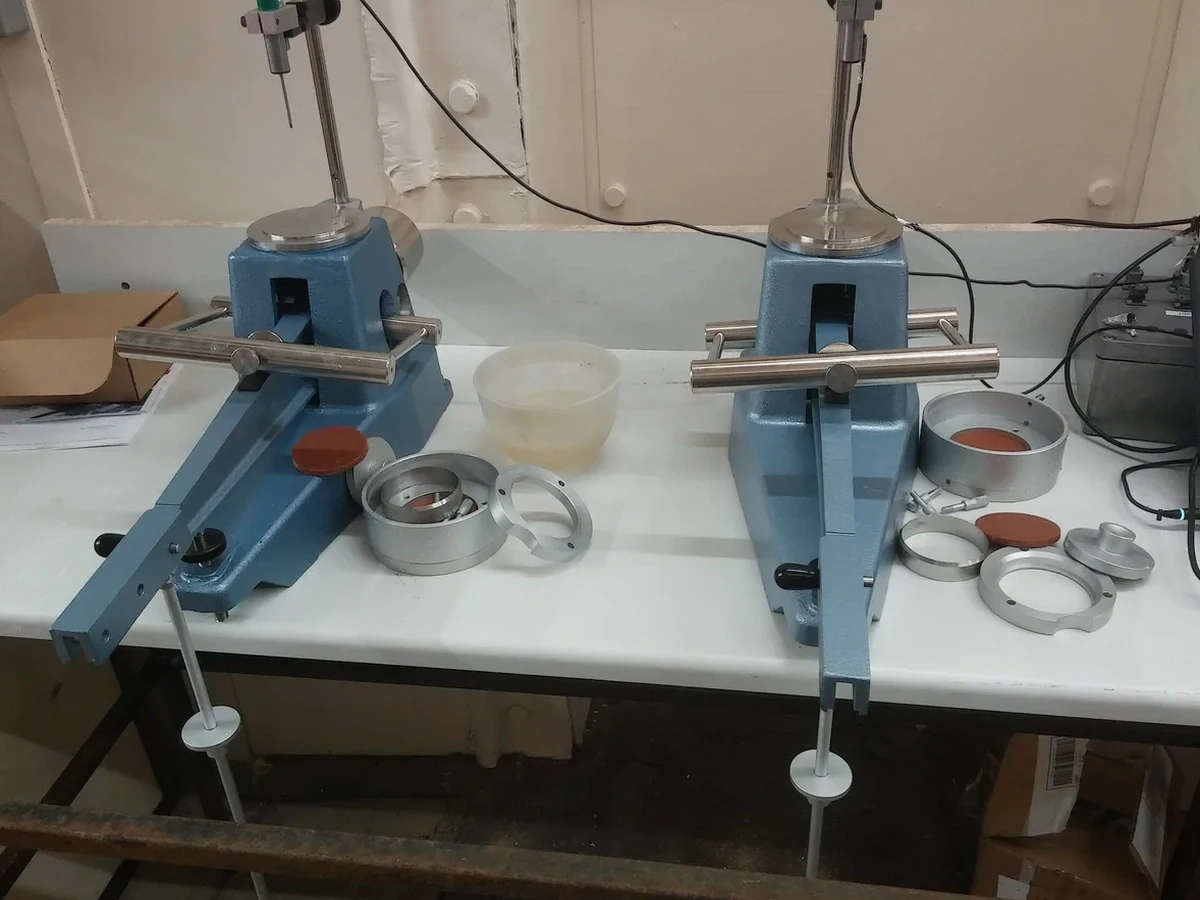
ASTM D4318 governs the liquid limit, plastic limit, and plasticity index determination. We follow the current version (D4318-17e1) and use the multipoint liquid limit method with the Casagrande cup, which is the reference procedure accepted by all Hillsborough County building departments and the Florida DOT.