Tampa’s expansion from a late 19th-century phosphate port into a major Gulf Coast metro reshaped its shoreline and subsurface. Much of the city sits on karst-influenced sandy limestone with water tables often less than 8 feet down. That combination makes deep excavation risky without proper lateral support. We apply active and passive anchor systems tailored to these conditions. Anchor design here must resist not only the lateral loads calculated per IBC Chapter 18 but also account for solution cavities and seasonal groundwater fluctuation. The project geologist logs each borehole to map the top of rock before bond length is set. We run pull tests to verify grout-to-ground bond in the Hawthorne Formation. For sites near McKay Bay where fill is thicker, we pair anchors with underpinning and a deep excavation monitoring program to track deflection during construction.
Anchor bond in Tampa limestone relies on grout penetration into vuggy porosity under pressure.
Methodology applied in Tampa Florida
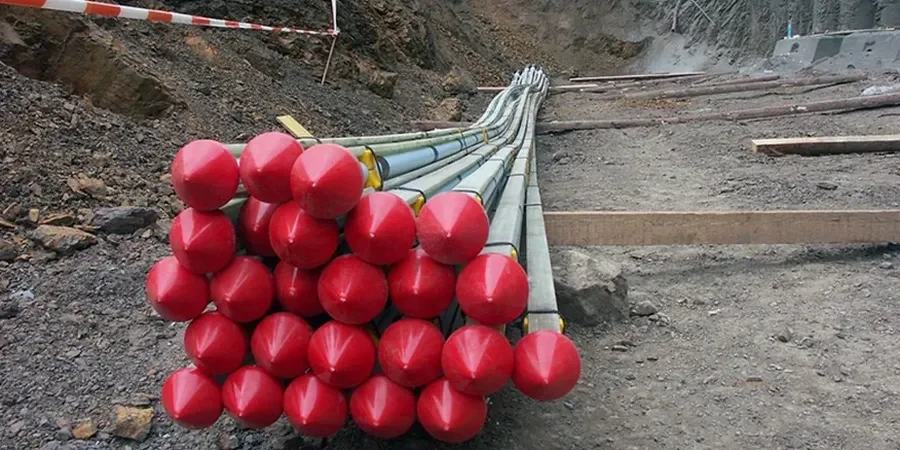
Local geotechnical conditions in Tampa Florida
Tampa sits just 48 feet above mean sea level. The 2022 hurricane season reminded everyone how fast groundwater can rise. An anchored wall that works in dry conditions can fail if pore pressure builds behind it. We design the drainage system and the anchor free length together. Without adequate weep holes or strip drains, hydrostatic pressure adds load the anchor was never sized for. In karst terrain, a cavity near the bond zone can cause sudden debonding during lock-off. We cross-check the borehole log with the anchor schedule on every hole. Cavities get pressure-grouted before the tendon goes in. For permanent anchors in the Floridan Aquifer zone, the corrosion protection level is bumped to Class II. No one wants a failed anchor 20 feet below Bayshore Boulevard. Regular lift-off testing catches load loss early.
Our services
Anchor design services for Tampa projects. We handle both temporary excavation support and permanent retaining structures.
Tieback anchor design
Active anchors for soldier pile and secant pile walls. Bond length calculation, load transfer analysis, and staged stressing procedure.
Soil nail design (passive)
Passive reinforcement for cut slopes in sandy soils. Nail spacing, length, and facing design per FHWA guidelines adapted to Florida geology.
Proof and performance testing
On-site pull testing with hydraulic jack and dial gauge. Load-extension curves, creep monitoring, and lock-off load verification.
Anchored wall monitoring
Load cell installation and periodic readings. Lift-off testing schedule for long-term projects near Tampa’s waterfront.
Common questions
How much does anchor design and testing cost in Tampa?
Anchor design and testing typically runs between US$1,020 and US$3,690 depending on the number of anchors, access conditions, and testing requirements. A small soil nail wall with 20 anchors and 3 proof tests falls at the lower end. A large tied-back excavation with 80 anchors, load cells, and multiple performance tests reaches the upper range.
What is the difference between active and passive anchors?
Active anchors are tensioned after installation to apply a pre-determined load to the structure. Passive anchors only engage when the ground moves. Active anchors control deflection better and are preferred for urban excavations near existing buildings. Passive anchors work well for slope stabilization where some movement is acceptable.
How do you handle corrosion protection in Florida's wet ground?
We apply double-corrosion protection per PTI DC35.1. The tendon gets a corrugated plastic sheath filled with grout inside the bond zone, and a smooth sheath greased in the free length. Anchor heads below the water table get a watertight cap. For permanent anchors, we specify Class II protection as a minimum.